Understanding Sunscreen and SPF
Chemical versus physical sunscreen, what the SPF number really tells you, the minutes myth, and how much to apply if you live in the La Jolla sun.
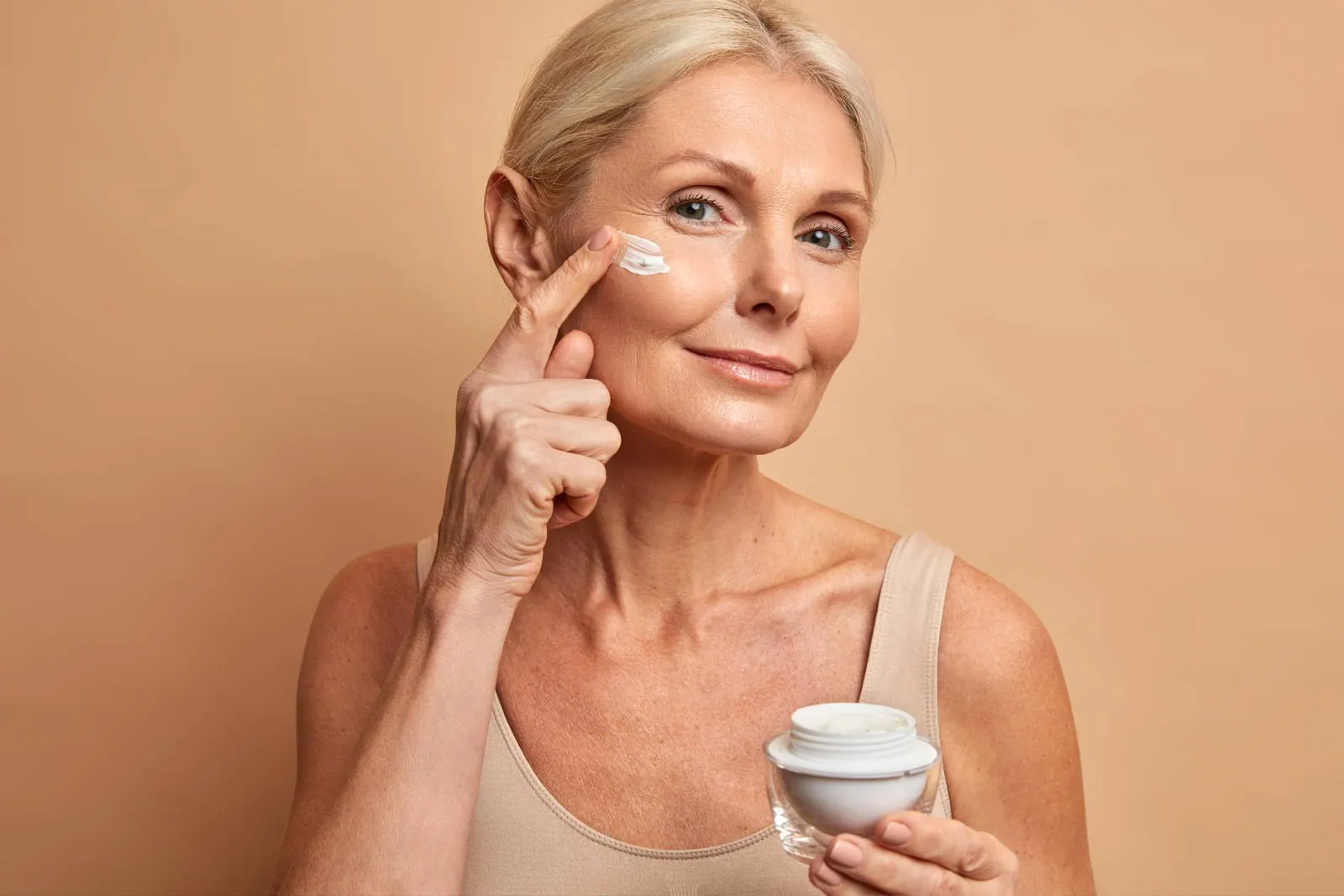
Sunscreen is the single most effective anti-aging product anyone owns, and the one clients most often use incorrectly. The labels do not help. Let’s make the choice simple.
Two kinds of sunscreen
Physical sunscreen, also called mineral, uses zinc oxide or titanium dioxide to sit on the surface and block UV. It starts working the moment it is on your skin. It tends to feel a little heavier and can leave a faint white cast, but it is usually the better choice for sensitive, reactive or allergy-prone skin, for rosacea, and for skin that has just had a peel or a wax.
Chemical sunscreen absorbs UV and converts it. It needs roughly 30 minutes to bind to the skin before you go outside, so applying it in the car does not count. It feels lighter, disappears into the skin and layers well under makeup.
Neither type blocks 100 percent of UV. Any product or salesperson promising total protection is overselling. What matters far more than the category is that you choose broad spectrum, apply enough, and reapply.
What the SPF number means
SPF measures protection against UVB, the rays most associated with burning. The scale is not linear, and the gap at the top is smaller than it looks:
- SPF 30 filters roughly 97 percent of UVB
- SPF 50 filters roughly 98 percent
- SPF 15 filters roughly 93 percent, which is not enough for daily life in Southern California
SPF 30 is the sensible daily minimum. SPF 50 is worth it if you are fair, if you are being treated for pigmentation, or if you are outdoors for hours.
The minutes myth. You may have read that SPF 30 gives you 300 minutes of protection and SPF 20 gives you 200. It is a tidy rule and it is not true. SPF is a ratio, not a timer, and it is measured in a lab with far more product than anyone applies in real life. Sweat, water, towels and simple rubbing off matter more than arithmetic. Reapply every two hours outdoors, and immediately after swimming or sweating, regardless of the number on the bottle.
Look for broad spectrum on the label. That indicates UVA coverage too, and UVA is the part of the spectrum most responsible for premature aging and pigmentation.
UV is everywhere, not just at the beach
- UV rays are present in every kind of weather, including overcast days.
- They bounce off water, sand, concrete and snow, so shade under an umbrella is partial protection at best.
- They pass through clouds, car and office windows, and lightweight clothing.
If you drive Torrey Pines Road every morning, sit by a window at work, or walk to lunch on Girard, you are accumulating UV exposure. Sun damage shows up as pigmentation, broken capillaries, loss of firmness and lines, and in the worst cases as skin cancer. Almost all of it is preventable with a habit that takes ten seconds a day.
How to apply it properly
- Use enough. Roughly half a teaspoon for face and neck. Most people apply a quarter of what they need and get a quarter of the protection.
- Do not forget the edges. Ears, hairline, the sides of the neck, the chest and the backs of the hands are where sun damage shows first.
- Layer it last. Sunscreen goes over serum and moisturizer, as the final skin care step before makeup.
- Reapply on a schedule. A powder or stick SPF over makeup makes the two-hour rule realistic.
- Be stricter after treatments. Skin is more vulnerable after a peel, an exfoliating facial, or waxing and Epilfree. Give freshly treated skin a day out of direct sun and use a physical sunscreen while it settles.
Repairing what is already there
If you are reading this because of existing pigmentation or sun damage, sunscreen is the foundation, not the whole answer. Professional and chemical peels, brightening facials and collagen-stimulating treatments all work on damage that has already happened, and they only hold if daily protection is in place. Tali will tell you honestly which sequence makes sense for your skin and how much of it you can do at home.
Not sure which sunscreen suits your skin type, or what to do about spots that have already appeared? Book a facial or a consultation and ask Tali to look at your skin.