Epilfree Hair Removal Treatment: A Detailed Guide
What Epilfree is, how the herbal two-step system works on every skin tone and hair color, who it suits, and what a realistic series looks like.
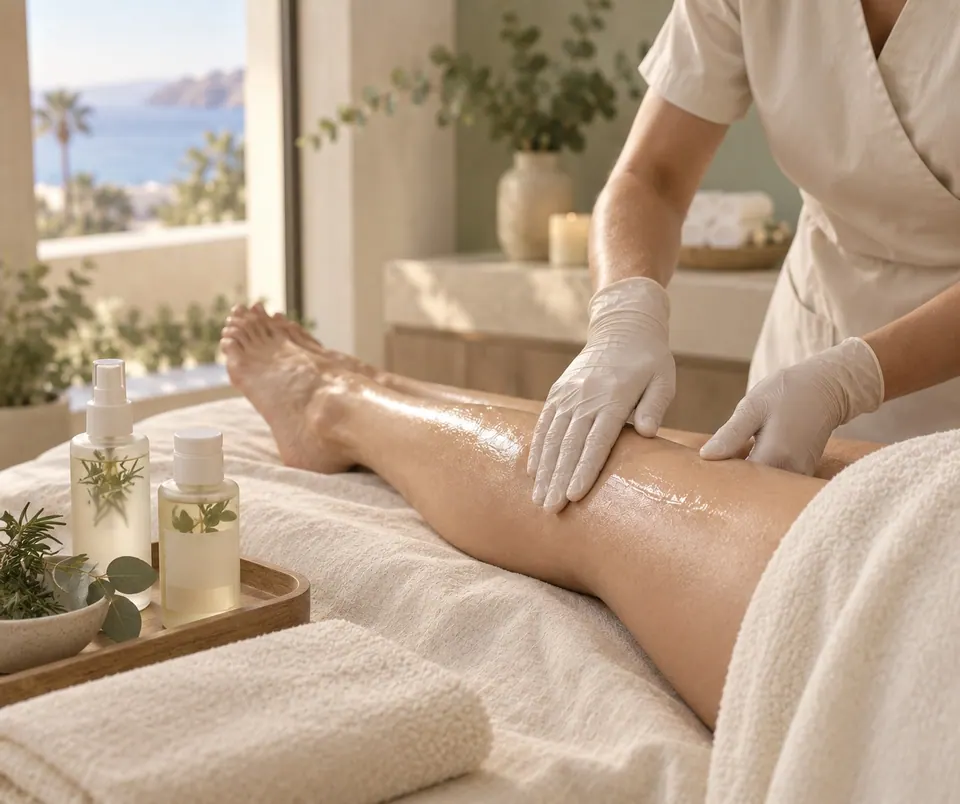
Unwanted hair is one of the most common reasons people call the studio. Shaving buys you two days. Waxing buys you a month, and for many clients that is enough. But if you are tired of putting the same appointment in the calendar forever, there is a third option worth understanding properly, because it is widely misdescribed online.
What Epilfree actually is
Epilfree is a professional two-step system of natural herbs and safe synthetics. It is not laser. There is no light, no heat and no machine involved at any point.
The treatment is applied immediately after a regular wax or sugaring, while the follicles are still open. The solutions travel into the open follicle and inhibit the hair’s growth phase at the root. Over a series of sessions, the hair that returns is finer, sparser and slower, until there is very little left to remove. People call it the laser alternative because it aims at the same outcome by a completely different route.
That distinction matters for a second reason: BeautyMark Shop does not offer laser hair removal. What we offer is waxing, and Epilfree applied with it.
Why it works where laser cannot
- It ignores pigment. Laser needs melanin in the hair shaft to convert light into heat, which is why it struggles with blonde, red, grey and very fine hair. Epilfree targets the follicle regardless of hair color.
- It suits every skin tone. Because nothing is heated and no light is absorbed, the risks that come with treating deeper skin tones by laser are not part of the picture.
- It is a natural blend. The formulas are herb-based rather than built around harsh chemicals, and they are soothing to apply. Many clients find the cool application a relief right after the wax.
- Fewer ingrown hairs. Shaving leaves hair to push back through at an awkward angle, which is what produces those itchy red bumps. Removing hair from the root and then slowing regrowth reduces the conditions that cause ingrowns in the first place.
- Better skin texture. The blend hydrates and soothes as it works, helping replace the moisture that any hair removal takes with it.
Epilfree can be used on the face and on the body, for women and men, from teens to adults: brows and lip, underarms, arms, legs, chest, back, bikini and Brazilian.
Being honest about comfort and timing
A few things the internet tends to gloss over, and we would rather say plainly.
It is not entirely pain-free. The hair still has to come out by wax or sugaring first, and that is a brief sting. The Epilfree step itself is comfortable. What we can promise is that Tali’s waxing technique, warm wax on skin prepped dry and clean, is about as gentle as hair removal gets.
It is a series, not a single visit. Hair grows in cycles, and only follicles in the active phase respond to anything. Sessions are spaced with your natural cycle, usually every four to six weeks, and most people need at least six or seven to reach smooth skin. Dense, coarse hair takes more sessions than fine hair, which affects both time and cost. Payment plans are available for a series.
It is permanent reduction, built gradually. Each round takes more hair out of circulation. What you are buying is a downward curve, not an overnight result.
Is it right for you?
Every Epilfree series here starts with a consultation and a proper look at your skin rather than just a booking. Epilfree is not applied to skin that is damaged, sunburned or irritated, and it is not combined with certain medications or recent skin procedures. If you have a skin condition or are on medication that affects your skin, check with your physician or dermatologist first, then bring that information to your appointment. Tali will map out a realistic plan from there and adjust as your hair responds.
If you have been weighing your options for years, bring the questions in. Book a waxing appointment and ask Tali about adding Epilfree, or come in for a consultation first.